Certified means audited
Any shop can say it works on your make. Certification is a different thing. The company that built the car sets the rules, and then it comes to check.
A program covers training, tools, the building itself and the parts a shop may use. Fail the audit and the certification goes away.
OEM stands for original equipment manufacturer. In plain words, the people who built your car.
What a shop has to buy and learn
The list below is roughly what one make asks for. Now multiply it by eleven, which is where our wall of certifications comes from.
One program can cost six figures once the tools and the room are counted. That is why most shops carry none at all.
- Factory training for the technicians on that make, renewed on the maker's schedule
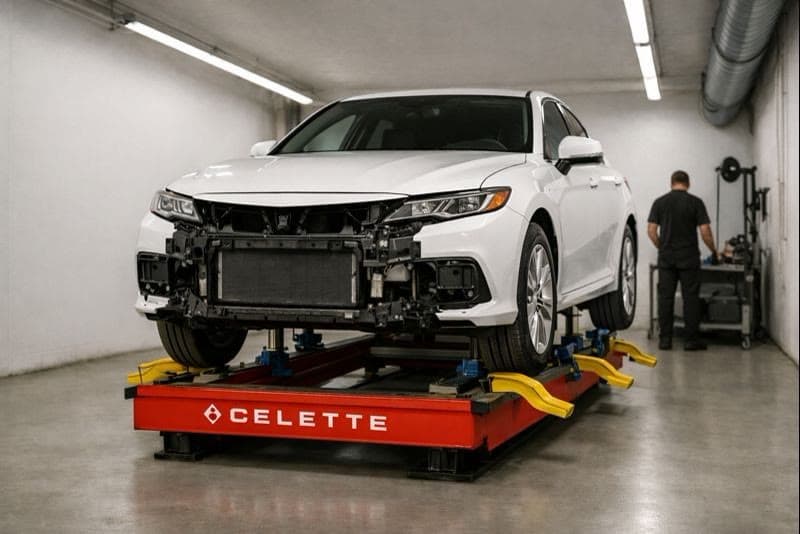
- Brand tools: welders, riveters, pullers and measuring gear that fit that brand and nothing else
- A sealed aluminum room, so steel dust never lands on aluminum panels
- A live subscription to the maker's repair procedures, with proof the shop follows them
- An on-site audit, usually every year or two
The materials your car is built from
A modern body is a mix. Aluminum, boron steel, magnesium castings and carbon fibre panels can sit within inches of each other.
Each one has its own rule. Boron steel cannot be heated to straighten it, because heat destroys the strength it was made for. Weld a joint the maker says to rivet and bond, and the crash structure stops working the way it was designed to.
Carbon fibre is its own trade again. A McLaren is built around a carbon fibre tub, and only trained techs are allowed near it.
ADAS, the part you cannot see
Cameras, radar units and sensors sit behind the windshield and inside bumper covers. Move one a couple of degrees and lane keeping aims at the wrong lane.
So a certified repair includes calibration, done the way the maker's procedure says. That is a set process with set targets, not a guess.
The whole repair gets written down, and that file is yours to keep.
The certifications we hold
Here is our list, so you can see what one shop can carry at once. Each line is a separate program with its own training and its own audit.
- McLaren Approved Bodyshop, the only one in Arizona, which is why cars get trailered here from out of state
- Mercedes-Benz Certified Collision Repair Center at the Elite level
- Tesla Approved Body Shop and Lucid Certified Collision Repair. We were the first shop in Arizona certified by both
- GM Collision Repair Network, plus FCA US Certified Collision Repair Center for Chrysler, Dodge, Jeep, Ram and Fiat
- Kia, Genesis, Hyundai and Honda/Acura certified collision programs
- I-CAR Gold Class, ASE certified technicians and BBB accreditation
What certification does not do
Certification is not a blank check, and we would rather say so up front. It does not decide what your insurance policy pays for. We push for genuine parts on every job, and the policy can still call for something else.
It does not make parts arrive faster either. A back ordered McLaren panel is back ordered at every shop in the country.
What it does buy you is a repair done the way the maker wrote it, by people the maker trained, with the paperwork to prove it. That is the part that shows up years later at trade in.
How to tell certified from we can work on it
Four questions do the job at any shop, including this one. A certified shop answers all four without stopping to think.
If the answers turn into a talk about price, you have your answer.
- Which programs do you hold, by make and by name?
- When were you last audited for my car's brand?
- Can I see the repair procedure printed for my job?
- What happens to your warranty if the parts are not genuine?
FAQs
Does an OEM certified repair cost me more?
The estimate follows the maker's steps, so some lines run higher. The insurer pays under your policy and you pay your deductible.
My car is not on your certified list. Can you fix it?
Yes. We repair most makes and follow the maker's published repair procedures either way. Certification adds the maker's own sign off on top.
Is a dealer body shop the same as a certified shop?
Not always. Plenty of dealers send collision work out. Ask which shop does the work and what that shop is certified for.
What is I-CAR Gold Class?
An industry training standard the shop renews every year. It sits alongside the maker programs rather than replacing them.
Do you have to use genuine parts?
We push for them, and the maker programs expect them. Your insurance policy can still decide what gets paid for.
How long does a calibration take?
It depends on the car and the sensors. Some finish in an hour. Some need a road drive and a second scan afterward.